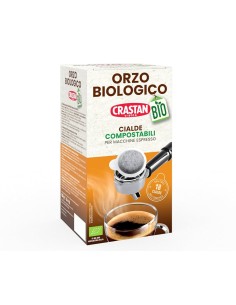
Crastan Soluble Drinks

Founded in 1870 in Pontedera by Luzio Crastan, a cheap alternative to expensive coffee due to import duties. Since 1991, it has been the first Italian organic soluble beverage company with Bioagricert certification. Only Italian barley without chemists.

Ginseng and Coffee, Effervescent Lemon, Bicarbonate and Ginseng Wafers: Tradition since 1870

Crastan was born in 1870 in Pontedera when Luzio Crastan understood that an economical alternative to coffee was needed. At the time coffee cost too much for most Italian families due to import duties the government applied on foreign goods. Newly unified Italy was a poor country where only aristocrats and wealthy bourgeois could afford the luxury of tropical coffee imported from Africa and America. Italian climate did not allow cultivating coffee plants needing high temperatures and constant humidity typical of equatorial regions, so the country completely depended on imports controlled by European colonial powers owning plantations in colonies.

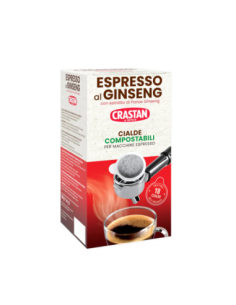
Ginseng and Coffee blend combines ginseng root with coffee creating beverage balancing caffeine energy with ginseng tonic properties. This combination reduces nervousness and tachycardia normal coffee can cause in sensitive people. Those drinking too much coffee during day often suffer anxiety and insomnia, and when trying to quit have withdrawal headaches. Ginseng helps moderate these side effects making beverage more balanced. Ginseng Espresso Pods are compatible with domestic coffee machines that made espresso accessible to everyone. Before espresso was drunk only at bar where baristas knew how to use complicated professional machines. Today home machines transformed public social habit into private individual consumption, reducing meeting occasions in bars that were places where people of different social classes mixed at counter.

In 1991 Crastan became first Italian company certified organic in soluble beverages sector through Bioagricert, obtaining operator code number one. It was pioneering achievement because at that time organic agriculture was still marginal and considered commercially impractical. Organic products cost more and yielded less, so masses preferred buying cheaper conventional products without worrying about environmental impact. Traditional agriculture however polluted water tables with chemical pesticides, damaged biodiversity with herbicides and caused aquatic ecosystem eutrophication with synthetic fertilizers. These environmental costs were not counted in sale prices, resulting artificially low while real total costs will be paid by future generations having to remedy environmental damage we are causing today.

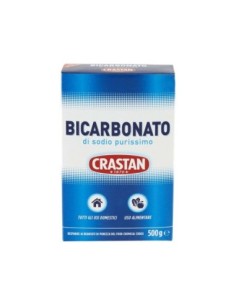
Effervescent with Lemon Juice mixes sodium bicarbonate with lemon citric acid creating reaction releasing carbon dioxide bubbles. This aids digestion stimulating stomach movements and neutralizing acidity causing esophageal reflux. Millions of people suffer chronic heartburn and daily take proton pump inhibitor drugs to reduce gastric acid. However stomach acid also serves to sterilize food and eliminate dangerous bacteria. When gastric acidity is reduced too much, stomach can no longer protect us from intestinal infections and intestinal bacterial flora imbalances can develop. Bicarbonate Box is versatile product used both in kitchen as digestive and leavening agent, and for household cleaning as ecological detergent and deodorizer. It replaces toxic chemical products industries sell with aggressive advertising exaggerating bacteria dangers to frighten consumers and push them to buy disinfectant arsenals. These chemical products completely sterilize environments eliminating even good microbes naturally keeping dangerous bacteria under control. Moreover they pollute rivers and seas where they end after drainage, damaging aquatic organisms and accumulating in food chain until arriving in fish we eat.

Fun fact: Luzio Crastan was accessibility pioneer because he made quality product available at low cost for late nineteenth-century Italian families who could not afford heavily taxed imported coffee. His entrepreneurial intuition combined profit with social justice demonstrating that company can succeed serving common people's needs instead of targeting only rich. Company installed photovoltaic panels at Pontedera plant reducing 215 tons CO2 annually, equivalent to planting 1500 trees. This investment demonstrates concrete sustainability commitment translating declared values into measurable and verifiable actions. Crastan uses only thermal and mechanical treatments without chemical products, fully enhancing Italian barley through processes minimizing waste. Residues are recovered as fertilizers and biofuels closing production cycles according circular economy principles, reducing ecological footprint and maximizing resource use.

Company uses exclusively one hundred percent Italian barley guaranteeing complete traceability from cultivation to transformation. This supports national farmers adopting sustainable practices preserving biodiversity and soil fertility conventional agriculture degrades with intensive monocultures. Bioagricert organic certification verifies cereal comes from cultivations respecting European standards prohibiting synthetic pesticides, herbicides, chemical fertilizers and GMO seeds. These controls protect consumers from contaminations pesticide residues cause accumulating in adipose tissues where they remain for years because body cannot eliminate them quickly. Studies link these chronic exposures to degenerative diseases increasingly affecting people in populations eating conventional foods contaminated by chemical substance cocktails. Regulations test substances one by one but in reality we are exposed to complex mixtures interacting together multiplying negative effects and overloading liver having to detoxify them all together.

quality

First Italian Organic Certification Soluble Drinks

In 1991 Crastan became the first Italian company certified organic in the soluble drinks sector through Bioagricert, obtaining operator code number one which attests to its pioneering nature when organic farming remained marginal and perceived as commercially impractical. The Bioagricert certification guarantees the absence of chemicals and GMOs in raw materials by verifying that barley comes from Italian organic farming and complies with European standards that prohibit synthetic pesticides, herbicides, chemical fertilizers and genetically modified seeds. The exclusive use of Italian barley ensures complete traceability from cultivation to processing by supporting domestic farmers who adopt sustainable practices while preserving biodiversity and fertility soils that conventional agriculture degrades through intensive monocultures requiring increasing chemical inputs compensating for progressive impoverishments. The processes use only heat and mechanical treatments without chemical additives, enhancing the grain in its entirety through controlled roasts that develop characteristic aromas without synthetic alterations, a purity that distinguishes it from industrial products that mask inferior qualities through artificial aromatizers simulating authenticity.

Energy Sustainability and Circular Economy

The company installed photovoltaic panels at the Pontedera plant, reducing energy impact with an estimated 215 tons of CO2 saved annually, equivalent to reforestation of 1,500 trees, an investment that translates sustainability commitment into measurable actions verifiable through transparent environmental metrics. The complete valorization of barley recovers production residues by transforming them into organic fertilizers and biofuels, closing cycles that circular economies prescribe, efficiency that minimizes waste, traditional industrial linearities generate by externalizing environmental costs to communities. Optimized production processes reduce water and energy consumption through efficient technologies that balance productivity with sustainability while avoiding unsustainable intensifications that maximize short-term outputs while degrading long-term production capacity. packaging reflects naturalness values by using materials and designs that communicate organic and Made in Italy consistently with certified content, transparency that builds trust among consumers who are increasingly skeptical of generic eco-marketing without documented substance through independent third-party certifications.

FAQ

Crastan was founded in 1870 in Pontedera by Luzio Crastan who sensed the need to create an economic alternative to coffee made inaccessible by import duties that the majority of Italian families could not afford. At the early twentieth century expanded its range with drinks such as CAFFEOL, DUTCH FAGO and MORETTO, diversifying its offering. In 1960 he introduced roasted barley which replaced original chicory, transforming it into a healthy and tasty alternative to coffee, developing roasting skills that characterize the product. In 1991 it became the first Italian organic company soluble drinks with Bioagricert certification, obtaining operator code number one, attesting to its pioneering nature when organic remained marginal. In 2019, it was acquired by the Prontofoods group, maintaining a strong presence in large-scale retail trade and European markets while preserving the historical identity and sustainability values that have characterized brands over 150 years. Its business continues, serving generations of Italian consumers.

The exclusive use of Italian barley ensures complete traceability from cultivation to processing by supporting national farmers who adopt sustainable practices while preserving biodiversity and fertility soils that conventional agriculture degrades. Since 1991, the Bioagricert organic certification has verified that barley comes from Italian organic farming and complies with European standards prohibiting synthetic pesticides, herbicides, chemical fertilizers and GMOs. The short supply chain reduces transport emissions by eliminating foreign cereal imports that would cross continents, generating significant CO2, a location that supports territorial economy while preserving native cereal varieties adapted to specific soil and climate contexts. The superior organoleptic quality derives from Italian varietal and terroir selections that confer distinctive characteristics that are impossible to replicate with standardized international commodity barley for maximum yields, sacrificing aromatic profiles that valuable territorial grains maintain through extensive cultivation respectful of natural cycles rather than chemically forced intensive ones.

barley is naturally caffeine-free avoiding the nervousness, tachycardia, insomnia, and physiological dependence that coffee causes in sensitive individuals who experience anxiety when consuming excessive doses accumulated daily. superior digestibility does not irritate gastric mucosa which coffee attacks through chlorogenic acids stimulating acidic secretions that esophageal reflux and gastritis cause in predisposed individuals. The nutritional profile includes soluble fiber that slows glucose absorption while avoiding glycemic spikes, minerals such as magnesium and phosphorus that support energy metabolism, and B vitamins that promote neurological function. The coffee-like roasted flavor satisfies morning rituals without taste compromises by allowing gradual transitions to those who want to reduce caffeine while maintaining sensory pleasure, a socializing hot drink. The historical affordability that Luzio Crastan pursued in 1870 remains valid because Italian barley costs less than imported tropical coffee, a democratization that makes quality accessible to popular groups rather than reserved for elites.

Through biological certification Bioagricert since 1991 which guarantees the absence of chemicals and GMOs by verifying that barley comes from agriculture respecting European standards that preserve biodiversity and soil fertility. The photovoltaic panels installed in Pontedera reduce 215 tonnes of CO2 annually equivalent to reforestation of 1500 trees, an investment in renewable energy that reduces dependence on fossil fuels. Complete valorization of barley recovers residues by transforming them into organic fertilizers and biofuels, closing cycles that circular economies prescribe by minimizing waste that industrial linearities throw away by externalizing environmental costs. processes use only heat and mechanical treatments without polluting chemical additives that conventional industries employ for artificial accelerations and storage that compromise naturalness. The Italian short supply chain reduces transport emissions by supporting a territorial economy that preserves native cereal varieties and traditional agronomic knowledge that intensive industrializations have eroded by standardizing production.

products

Showing 1-11 of 11 item(s)
Product added to wishlist